

commercial access barrier
Commercial access barriers are the multifaceted obstacles that impede businesses—whether new entrants or existing players—from entering a market, scaling operations, or connecting with target customers. These barriers span regulatory, financial, structural, and technological domains, shaping market dynamics and influencing competition. Regulatory barriers often act as the first line of defense for established players. For instance, certain industries mandate rigorous licensing processes, requiring businesses to invest significant time and resources in obtaining certifications, permits, or compliance with safety standards. Zoning restrictions can further limit access to high-traffic locations, confining new ventures to less visible areas and reducing their customer reach. Financial barriers are equally daunting. Startup costs in sectors like manufacturing or technology can be prohibitive, requiring investments in specialized equipment, R&D, or initial inventory. Access to capital exacerbates this: traditional lenders often prioritize businesses with proven track records, leaving new entrants struggling to secure loans or venture funding. Even existing small businesses may find it hard to expand due to high interest rates or strict collateral requirements. Structural barriers stem from market dominance. Economies of scale allow large incumbents to produce goods at lower per-unit costs, undercutting new competitors who can’t match their pricing. Brand loyalty is another factor: consumers often stick to familiar brands, making it challenging for new players to build trust and gain market share. Network effects—where a product’s value grows with more users—create a self-reinforcing cycle; for example, a new digital platform struggles to attract users if most people already use an established alternative. Supply chain and distribution barriers further restrict access. Established businesses often hold exclusive contracts with suppliers or distributors, locking new entrants out of critical resources or distribution channels. A small food producer, for example, might find it impossible to get shelf space in major retailers, as those spots are reserved for brands with long-term partnerships. Technological barriers include patents or proprietary systems that prevent competitors from using key innovations. Additionally, the need for advanced technology—such as AI tools or specialized software—can be cost-prohibitive for small businesses, widening the gap between incumbents and new players. These barriers have far-reaching impacts: reduced competition leads to higher prices for consumers, slower innovation, and limited choice. They also stifle entrepreneurship, particularly for marginalized groups or SMEs that lack the resources to navigate these obstacles. Addressing commercial access barriers is crucial for fostering a dynamic, inclusive market where new ideas can thrive and consumers benefit from fair competition. (Word count: 498)
Products
Category:
-
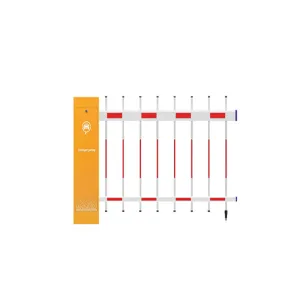
D105 Durable Barrier Gate for Industrial Parking Control
Category: License Plate RecognitionBrowse number: 17Number:Release time: 2026-03-23 11:41:13The D105 durable barrier gate is engineered to provide stable and long-lasting performance in demanding environments where consistent vehicle access control is essential. As a reliable vehicle access system, it is designed for continuous operation in both commercial and industrial settings.
News
Category:
-
[Company News]The three elements of the advertising door in the pedestrian...
2026-03-21 14:26:47
Case
Category:

Video
Category:
No search results found!
Download
Category:
No search results found!
Job
Category:
No search results found!
Featured Products
No search results found!



 Phone
Phone